Best Nootropics for Deep Work: Natural Focus vs Short Term Stimulants
If you rely on coffee or energy drinks to power through demanding tasks, you are not alone. But there is a growing body of evidence that natural nootropics can deliver deeper, more sustainable focus without the crash. Here is how they compare.
Deep work the ability to concentrate without distraction on a cognitively demanding task is the single biggest predictor of professional output. Yet most people rely on short term stimulants that undermine the very endurance they need. In this guide, we compare the science behind natural nootropics for focus against everyday stimulants like coffee and energy drinks, and explain why the former is better for long term cognitive health.
What deep work demands from your brain
Cal Newport, who popularised the term deep work, defines it as professional activities performed in a state of distraction-free concentration that push your cognitive capabilities to their limit. It is not about being busy. It is about producing high-value output in a single, unbroken block of time.
That kind of performance demands more than wakefulness. It requires:
- Sustained attention holding a single thread of thought for 60 to 120 minutes without drifting.
- Working memory keeping multiple variables in mind while solving complex problems.
- Cognitive endurance maintaining clarity at the end of a long session, not just the beginning.
- Emotional regulation staying calm under intellectual pressure so anxiety does not derail focus.
Stimulants address only the first item on that list. Nootropics for focus can support all four.
The stimulant trap: coffee and energy drinks
Caffeine is the most widely consumed psychoactive substance on earth, and for good reason. It blocks adenosine receptors, which reduces the sensation of fatigue and increases alertness. In moderate doses, it improves reaction time, vigilance, and even mood.
But coffee and energy drinks come with a structural problem for deep work: the half-life curve. Caffeine peaks in the bloodstream within 30 to 60 minutes, then declines. That curve creates a boom-bust cycle a spike of energy followed by a crash that often hits right when you are in the middle of a complex problem.
Energy drinks compound the issue. They typically combine high-dose caffeine with sugar or artificial sweeteners, taurine, and B-vitamins. The sugar triggers an insulin response that can deepen the post-caffeine crash. Some products contain 200 mg of caffeine or more enough to push many people into jitteriness, elevated heart rate, and anxiety, all of which disrupt the calm focus deep work requires.
Perhaps most importantly, neither coffee nor energy drinks support the underlying biology of cognition. They mask fatigue; they do not build cognitive endurance. Over time, tolerance develops, and the same dose produces less benefit. You drink more, crash harder, and sleep worse a loop that erodes the very productivity you are chasing.
How natural nootropics support focus differently
Natural nootropics work through mechanisms that complement, rather than override, your brain's own chemistry. Instead of blocking fatigue signals, they support the neurotransmitters, energy metabolism, and stress systems that make sustained attention possible in the first place.
The result is a calmer, more stable focus what researchers sometimes call relaxed alertness. It does not feel like a jolt. It feels like your mind is simply less prone to wandering, and more willing to stay with a hard problem until it breaks.
Neurotransmitter support
Alpha-GPC provides choline for acetylcholine synthesis, the neurotransmitter central to attention and memory formation.
Smooth alertness
L-Theanine promotes alpha brain waves, creating focused calm without sedation or the jitters of high-dose caffeine.
Smart caffeine pairing
Low-dose natural caffeine combined with L-Theanine delivers alertness with reduced anxiety and a gentler decline.
Cognitive endurance
Adaptogens like ginseng support mental stamina across long work sessions rather than a short-lived spike.
The best natural nootropics for deep work
Alpha-GPC
Alpha-GPC is one of the most bioavailable forms of choline, a nutrient your brain uses to manufacture acetylcholine. Acetylcholine is the primary neurotransmitter of the parasympathetic nervous system and is deeply involved in attention, learning, and memory consolidation. Research indicates that Alpha-GPC can support cognitive performance and attention, particularly during tasks that demand sustained mental effort. Unlike stimulants, it does not create tolerance or withdrawal.
L-Theanine
L-Theanine is a non-protein amino acid found in tea leaves. It crosses the blood-brain barrier and increases alpha wave activity, the brain state associated with relaxed alertness. When combined with caffeine, L-Theanine has been shown to improve focus and accuracy while reducing the subjective feeling of stress. This makes it ideal for deep work, where anxiety is often the enemy of concentration.
Natural caffeine (low dose)
Caffeine is not the enemy the dose and delivery are. At moderate levels (roughly 50 to 100 mg), caffeine increases alertness and reduces perceived effort without triggering the jitters, anxiety, or subsequent crash associated with energy drinks. The key is context: paired with L-Theanine and taken at the start of a focused block, rather than consumed continuously throughout the day.
Ginseng
Ginseng is a well-studied adaptogen with centuries of traditional use. Modern clinical research points to benefits for mental energy and cognitive endurance, particularly during prolonged or mentally fatiguing tasks. It appears to work partly by modulating the hypothalamic-pituitary-adrenal axis, which governs the body's stress response. For deep work, that translates to steadier performance across a full day.
Natural nootropics vs stimulants: the comparison
Here is a side-by-side look at how natural nootropics for focus stack up against the stimulants most people rely on:
| Factor | Natural Nootropics | Coffee / Energy Drinks |
|---|---|---|
| Onset | Gradual (20–30 min) | Rapid (10–20 min) |
| Peak effect | Smooth, stable plateau | Sharp spike, often jittery |
| Duration | 3–5 hours of steady focus | 1–3 hours, then crash |
| Crash | Minimal or none | Common and pronounced |
| Tolerance | Low benefits sustain over time | High requires escalating doses |
| Sleep impact | Minimal when taken before mid afternoon | Significant caffeine lingers 5–7 hours |
| Long term cognitive health | Supported through neurotransmitter and metabolic support | Neutral or negative with chronic overuse |
| Best use case | Deep work blocks, creative sessions, study | Short tasks, social alertness, morning ritual |
The science of focus and cognitive endurance
Focus is not a single process. It is the result of several interacting brain systems: the prefrontal cortex, which governs executive function; the locus coeruleus, which regulates arousal through norepinephrine; and the default mode network, which generates mind-wandering and must be suppressed during demanding tasks.
Stimulants primarily boost arousal through the locus coeruleus. That is useful when you are genuinely drowsy, but beyond a certain point, more arousal does not equal more focus. It equals anxiety, racing thoughts, and impulsivity the opposite of deep work.
Natural nootropics take a more distributed approach. Alpha-GPC supports acetylcholine, which enhances signal-to-noise ratio in the prefrontal cortex. L-Theanine increases GABA and alpha waves, which suppresses the default mode network's tendency to wander. Ginseng modulates cortisol, preventing stress from hijacking attention. The result is not forced concentration, but available concentration the state where your brain is willing and able to stay on task.
Cognitive endurance, meanwhile, depends on brain energy metabolism. The brain consumes roughly 20 percent of the body's energy despite being 2 percent of its mass. Compounds that support mitochondrial function and glucose utilisation such as those found in adaptogenic nootropics help sustain that metabolic demand across long sessions without the metabolic debt that leads to crash.
Long term cognitive health vs short term stimulation
There is a fundamental difference between performance enhancement and health support. Stimulants are performance enhancers in the narrow sense: they push you past your current limits, often at a cost. Nootropics are health supporters that happen to improve performance by strengthening the systems cognition depends on.
Chronic high-dose caffeine use has been linked in some studies to disrupted sleep architecture, elevated cortisol, and habituation that reduces its own effectiveness. Energy drinks, with their added sugar and synthetic ingredients, carry additional metabolic risks when consumed regularly.
Natural nootropics, by contrast, have longer histories of safe use and mechanisms that support rather than deplete. Choline is an essential nutrient. L-Theanine is consumed daily by millions in tea. Ginseng has been used medicinally for over two thousand years. None of these compounds require a withdrawal strategy.
The choice is not between productivity and health. It is between borrowing focus from tomorrow and building the capacity to focus today, tomorrow, and next year.
How to use nootropics for deep work
The best nootropic stack in the world will not compensate for poor work habits. Here is how to integrate natural focus support into a deep work routine:
- Time it intentionally. Take your nootropic 20–30 minutes before a scheduled deep work block. Do not spread it randomly across the day.
- Protect the block. Turn off notifications, close irrelevant tabs, and communicate your unavailability. Nootropics amplify the focus you create; they do not create it out of nothing.
- Match dose to task. A lighter dose is fine for routine work. Save the full stack for your most demanding creative or analytical sessions.
- Cycle if needed. Some people benefit from taking nootropics only on work days, or skipping one day a week. Listen to your response.
- Support with basics. Sleep, hydration, exercise, and protein-rich meals are the foundation. Nootropics are a multiplier, not a replacement.
Final verdict: what to choose for deep work
Coffee and energy drinks have a place. They are socially embedded, instantly available, and effective for short bursts of alertness. But if your goal is sustained, high-quality cognitive output the kind that defines a meaningful career natural nootropics are the better tool.
The best nootropics for focus do not trick your brain into working harder. They remove the friction that stops it from working naturally well. Over weeks and months, that compounds into better work, deeper learning, and a mind that stays sharp without relying on the next cup.
Ready to lock in?
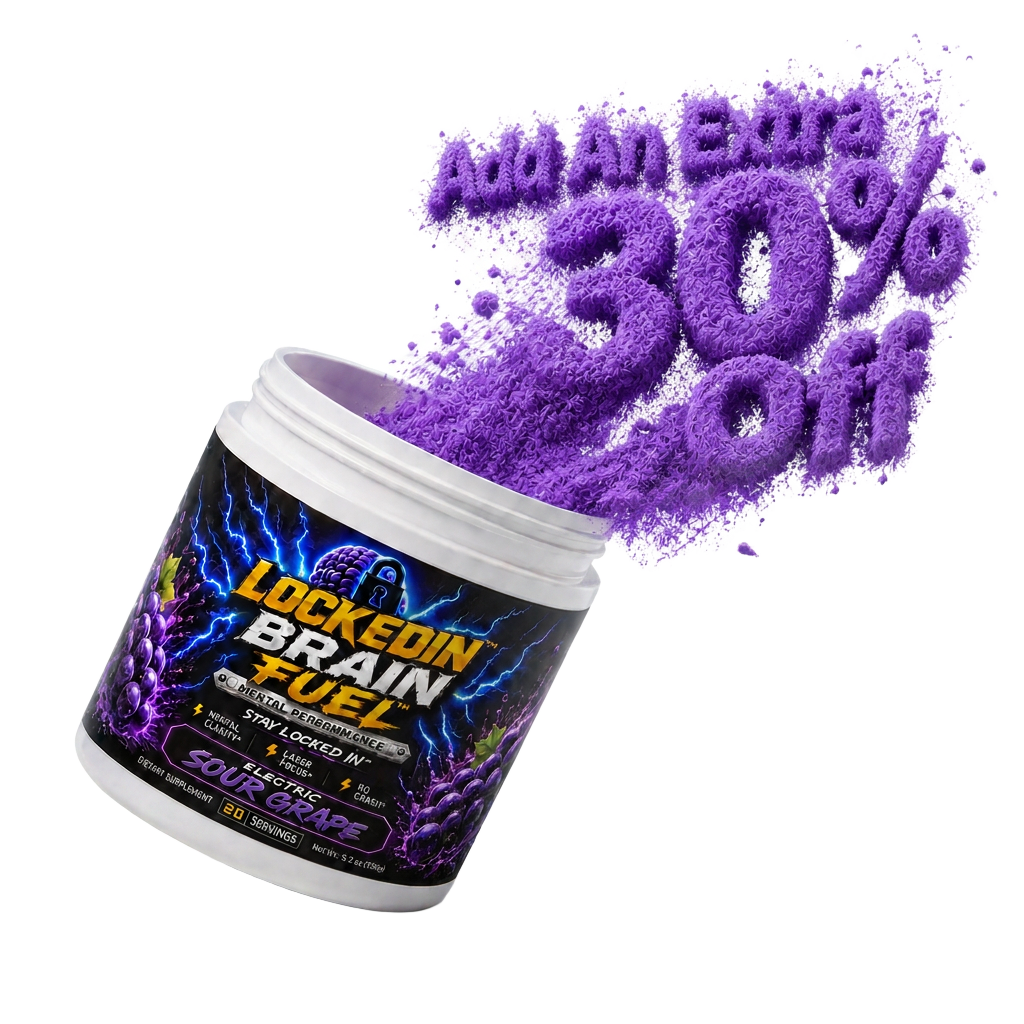
Locked In is a nootropic focus powder built for deep work. It combines Alpha-GPC, L-Theanine, natural caffeine, and ginseng formulated for sustained focus without the crash. Transparent dosing, no proprietary blends.
Shop Focus Powder