Recovery
Nootropics for Sleep and Recovery: What Actually Works
You can't out-supplement bad sleep. The best nootropic you'll take all week is the one that gets you to bed on time. Here's the science of sleep for cognitive performance, and the ingredients with real evidence for winding down, sleeping deeper, and waking up sharp.
Why sleep is the ultimate nootropic
Every cognitive metric that a daytime nootropic tries to improve working memory, reaction time, sustained attention, mood, motivation is set by the previous night's sleep. Deep (slow-wave) sleep triggers the glymphatic system to flush metabolic waste, including beta-amyloid, from between neurons. REM sleep consolidates the day's learning. And overnight, acetylcholine, dopamine and adenosine receptors are re-sensitised meaning tomorrow's caffeine and Alpha-GPC actually work.
Miss it, and you start the day with a cognitive deficit no stack can fully cover. That's why the smartest addition to a focus routine is often a sleep routine.
Magnesium L-Threonate the only magnesium that reaches the brain
Most magnesium forms (citrate, oxide, glycinate) raise serum magnesium but poorly cross the blood-brain barrier. Magnesium L-Threonate developed at MIT was designed specifically to enter the brain and raise CNS magnesium levels. Human and animal studies link it to improved sleep quality, deeper slow-wave sleep, and better next day working memory.
Dose: 1,000–2,000 mg (delivering ~144–288 mg elemental magnesium), split across evening or evening-only. Timing: 1–2 hours before bed.
Apigenin the chamomile compound
Apigenin is a flavonoid concentrated in chamomile that binds the benzodiazepine site of GABA-A receptors producing mild anxiolytic and sleep-promoting effects without dependence. It became a mainstream nootropic through Andrew Huberman's popular evening stack.
Dose: 50 mg. Timing: 30–60 minutes before bed. Pairs well with magnesium and glycine.
L-Theanine the crossover ingredient
L-Theanine is best known as the calm focus half of the caffeine + L-theanine focus stack, but it also improves subjective sleep quality and reduces sleep-onset latency at the same 200 mg dose. It increases alpha brain-wave activity the state of relaxed alertness that precedes sleep and modulates GABA and glutamate.
Dose: 200 mg. Timing: 30–60 minutes before bed.
Glycine the underrated amino acid
Glycine is an inhibitory neurotransmitter that lowers core body temperature the same drop in core temp that signals the brain it's time to sleep. In trials, 3 g of glycine before bed improved subjective sleep quality, shortened sleep-onset latency, and reduced next day fatigue.
Dose: 3 g. Timing: 30–60 minutes before bed. Slightly sweet dissolves in water.
Ashwagandha for stress-driven insomnia
Ashwagandha (specifically KSM-66 or Shoden extract) lowers evening cortisol and improves sleep quality in stressed populations. If your sleep problem is a racing mind rather than pure sleep architecture, it's the adaptogen with the strongest sleep evidence.
Dose: 300–600 mg standardised extract, daily. Effects build over 4–8 weeks.
A sample evening stack
- 2 hours before bed: 2,000 mg Magnesium L-Threonate. No caffeine after 2 pm.
- 60 minutes before bed: 50 mg apigenin + 200 mg L-theanine + 3 g glycine. Dim the lights.
- Ongoing: 600 mg ashwagandha daily (morning or with dinner).
What NOT to take at night
- Caffeine after 2 pm half-life is 5–6 hours; a 4 pm coffee still has meaningful caffeine on board at midnight.
- L-Tyrosine, Rhodiola, Panax ginseng in the evening these upregulate dopamine and catecholamines and can delay sleep onset.
- Melatonin above 0.3 mg the popular 3–10 mg pills are ~10–30× the physiological dose and often produce grogginess and receptor desensitisation. If used, go low.
- Alcohol knocks you out but destroys REM and slow-wave sleep architecture. There is no "nightcap" that helps cognition.
The daytime payoff
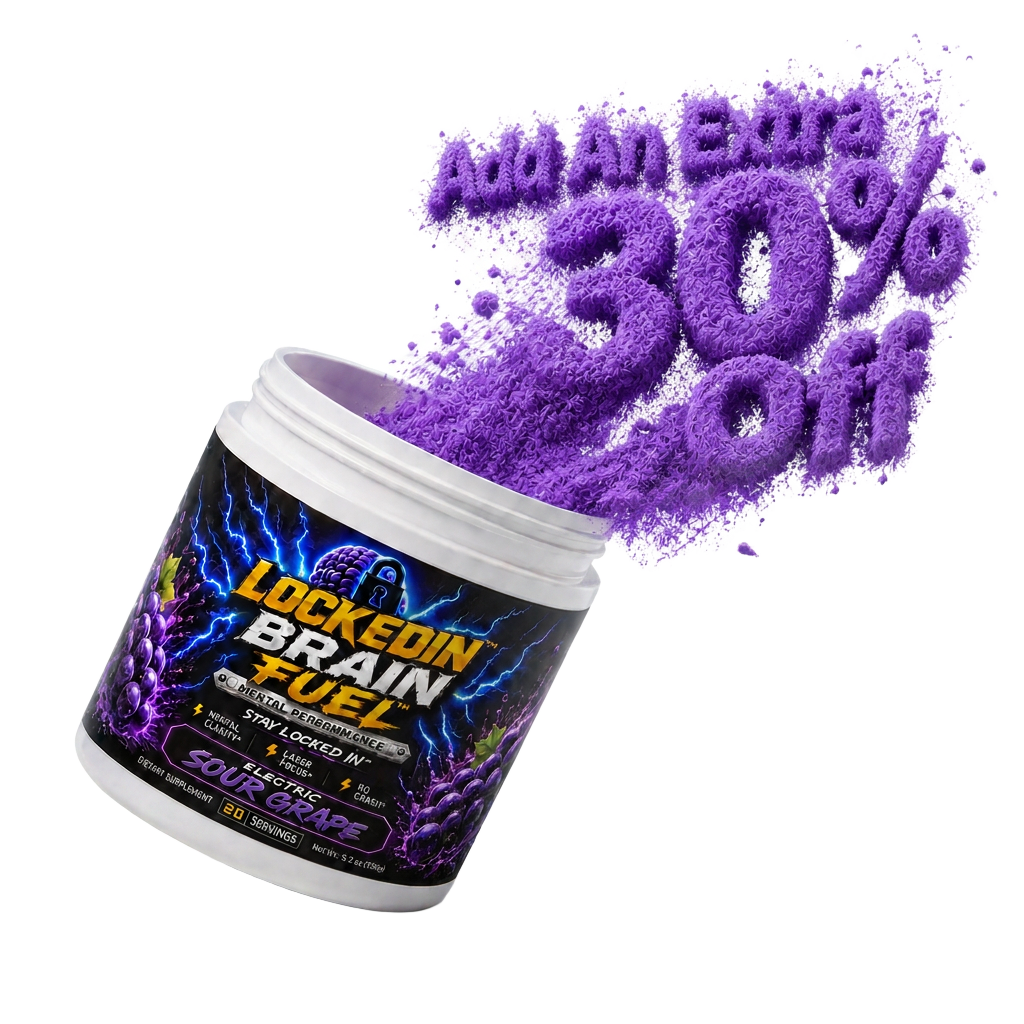
A better night's sleep isn't just recovery it's the setup for tomorrow's focus. Once sleep is dialled in, a clean morning stack (like Locked In) with 300 mg Alpha-GPC, 200 mg L-theanine, and 150 mg natural caffeine actually lands the way the research says it should. Bad sleep first, then nootropics, is the wrong order and it's why most people feel diminishing returns from their stack.
FAQ
- What is the best nootropic for sleep?
- Magnesium L-Threonate is the most research backed nootropic specifically studied for sleep and next day cognition it's the only magnesium form shown to meaningfully cross the blood-brain barrier. For faster sleep onset, apigenin (50 mg) and L-theanine (200 mg) are the best-supported add ons.
- Do nootropics actually help you sleep better?
- The right ones do. Nootropics that lower nervous-system arousal (L-theanine, apigenin, glycine) or support GABA and magnesium balance (Magnesium L-Threonate, L-theanine) improve sleep latency and sleep quality in clinical trials. Stimulant nootropics (caffeine, tyrosine) will do the opposite if taken too late.
- How does sleep affect focus and cognitive performance?
- Sleep is when the glymphatic system clears metabolic waste from the brain, when memories consolidate, and when acetylcholine and dopamine receptors are re-sensitised. Even one short night measurably drops working memory, reaction time and error rates the next day no daytime nootropic fully compensates.
- Can I take L-theanine at night?
- Yes. L-theanine (200 mg, 30–60 minutes before bed) reduces sleep-onset latency and improves subjective sleep quality without sedation. It's one of the few nootropics safe to use both for daytime focus and evening wind down.
- What is apigenin and why is it used for sleep?
- Apigenin is a flavonoid found in chamomile that binds benzodiazepine receptors and produces mild anxiolytic and sleep-promoting effects. A 50 mg dose 30–60 minutes before bed is the popular protocol; it pairs well with magnesium and glycine.
- When should I take a sleep stack?
- 30–60 minutes before bed for apigenin, glycine and L-theanine. Magnesium L-Threonate can be taken earlier in the evening (or split morning + night). Avoid all stimulant nootropics after early afternoon caffeine's half-life is 5–6 hours.
Wake up sharper with Locked In
Fully disclosed, clinically dosed daytime focus the perfect complement to a real sleep routine.
Shop Locked In